THE MATTER OF SACRIFICE AND BLOODSHED
By Waifo F. Ilozavbie
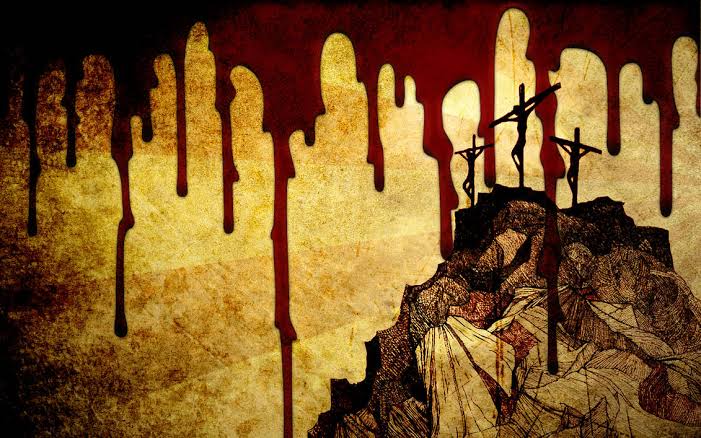
The ownership of blood is the collective treasure of men of all races and creed – an ownership that cuts across every social strata of society.
What is it about blood? It is about life. It is life flowing in the veins of the living. The Christian Scripture has this to say about blood: For the life of the flesh is in the blood, and I have given it to you upon the altar to make atonement for your souls; for it is the blood that makes atonement for the soul (Lev 17:11).
The sacrifice of blood is the ultimate sacrifice. Heaven and earth are yet to know a greater evidence of sacrificial commitment to a cause. The spirit world and humanity are yet to know a more effective sacrifice outside the sacrifice of blood.
Humanity is yet to know a stronger motivation to fight than in defence against one’s blood being shed. The shedding of blood is the ultimate crime. The stopping of your blood from being shed is the ultimate defence. Nobody – saint or sinner, rich or poor, young or old, literate or illiterate – wants his or her blood to be shed.
The readiness of one to shed his or her blood is the ultimate proof of unrivaled commitment to a cause. The shedding of one’s blood for the well-being of another is the ultimate proof of love and care. It is the ultimate sacrifice.
There is no greater fear known to man than when there is the faintest hint of the possibility of your blood being shed in any involvement. The willingness of martyrs and heroes to shed their blood was not without fear; but it was fear they overcame by the necessity of sacrifice and the call of duty.
The sacrifice of life – the shedding of blood – sometimes becomes the barometer with which the worthiness of a cause is measured and treasured. It becomes a source of motivation and inspiration to the living – a well from which the water of inspiration and continuity is drunk by the adherents of the cause.
The sacrifice of martyrs and heroes of yore fans the embers of courage to flame. It turns reluctant men and women to willing adherents. Sacrifice is a catalyst of struggle and recruitment of commitment to a cause.
The sacrifices of Hector Pieterson, of the revolt against Bantu education fame, the death of Steve Biko in prison, the refusal of Nelson Mandela and many others to compromise in the struggle against apartheid in South Africa, who instead chose to pay the price of suffering, torture, imprisonment and death, was a great source of inspiration and catalyst in the struggle against apartheid in South Africa and the eventual success of the struggle. The story of their sacrifice still inspires commitment and patriotism, and mobilizes unity in the quest for national development.
In Shia Islam, the sacrifice of Hussain, who, in spite of being vastly outnumbered, refused to compromise his conviction and took his stand against the army of Yazid, still fans the embers of loyalty – even fanaticism – in that circle.
The sacrifice of the medical doctor, Chi Guevara, who fought and died for the cause of socialism, still inspires many of that ideological persuasion around the world today.
In Christianity, the sacrificial and heroic commitment of Daniel, who opted for the lions den instead of compromising his conviction; and men like Shedrack, Meshack and Abednego who preferred the burning furnace to bowing down to an idol, still inspires loyalty and commitment in the Christian community worldwide.
Most, if not all, of the twelve disciples of Jesus were killed – beheaded, skinned alive, tied to and dragged around to death by horse-driven chariots, and, like Jesus, were executed on the cross – Roman style – when they refused to recant and conform to the pagan traditions of their day.
The commitment and sacrifice of these men have become a great source of inspiration and encouragement to millions around the world across the ages. Sacrifice is the seed that must be sown – and it is frequently watered by pain and blood – for flowering and continuity of any cause or struggle. It was Tertullian who wrote that, “the blood of the martyrs is the seed of the Church.”
We can safely say that, any cause or struggle without sacrifice has no future. It is akin to trying to make a fire without firewood. Sacrifice is the firewood that keeps the fire of struggle or devotion to a cause burning. The greater the sacrifice put in for a cause, the greater the likelihood of success; the less the sacrifice put in the less the likelihood of success.
In sacrificing for a cause, the place of choice, focus and determination cannot be overemphasized. Every sacrifice that might necessitate the shedding of blood calls for a deep reflection on the part of the individual or group involved. All the senses – intelligence – at your disposal must be engaged in the thought process, you must be personally convinced and be determined to pay the ultimate price – to win the prize. Martyrdom is a tough call in the continuous battle against injustice, and to keep religious fervour aflame.
A a common thread that runs through the life of men and women who paid the ultimate price – who shed their blood – for a cause or struggle; be it a political or a religious one, is this: they were men and women of deep personal convictions. A man must have faith in a cause to be faithful to that cause and its tenets. It is futile for a man to be involved in any cause he does not have faith in. He will have no motivation to sacrifice for that cause. The Christian Scripture says in Proverbs 25:19, “Confidence in an unfaithful man in time of trouble is like a broken tooth, and a foot out of joint”. Such a man will do the cause he is involved in no good; he will be a source of great pain and sorrow to the cause.
In the run of history, the shedding of blood has been for both the right and wrong reasons, and even more so in the name of God. Much blood has been shed in wars of conquest, in defence of territories and over earthly possessions, and in proselytizing efforts, and natural disasters, etc.
In one of my musings the other day, I wondered which group in history has shed blood the most? Could it be the Aztecs, notorious for their human sacrifice of at least one hundred and fifty thousand persons to the gods annually? Could it be the Incas known to sacrifice children, or the Mayans who also practised human sacrifice? Could it be the Mongols, in their bloody massacres conquest as they swept through central Asia to the entrails of eastern Europe? Could it be Islam, in its sweep through the Arabian peninsular, its forceful intervention in North Africa and its bloody military campaign in Asia? Could it be the Church, in its bloody papal inquisitions across Europe? Could it be the Vikings, in their looting spree? Could it be ….?
Man has laboured through the ages to maintain the sanctity of human life, to prevent the unnecessary shedding of blood. Global institutions like the United Nations Organisation and others were established to ensure peace in the world; but history has shown that “there is no record of civilization that is not at the same time a record of barbarity.” The brutal shedding of blood is a common thread that runs through every civilization and epoch in history, reaching its height in the Second World War; with over fifty million men and women and children killed; properties worth billions of dollars destroyed.
High hopes that men would beat their swords into ploughshares, And their spears to pruning hooks; that Nation shall not lift up sword against nation, Neither shall they learn war anymore (Isa 2:4), have been dashed for now – pushed down from the mountain top of hope to the valley of despair and despondency, by the ambition of man to subdue and dominate others.
Every year the world expends billions of dollars on defence and the production of increasingly fearsome and lethal weapons of mass destruction (of lives and property). The defence budget of the United States alone, for this year, amounts to a whopping seven hundred billion dollars! Fogh Rasmussen, a former North Atlantic Treaty Organisation (NATO), Secretary General, declared: “Security is precious. Freedom is priceless – and it doesn’t come free.”
The blood that has been shed all through history did not solve the problems of the world. It did not and could not redeem man – not even that shed in the name of God could; humanity is still being assaulted by the ills of poverty, sickness and diseases, hunger, wars, etc.
There is this provision, according to Christian literature, made by God for the redemption of humanity through the shedding of blood, for without shedding of blood there is no remission [forgiveness] of sin (Heb 9:22). It was a sacrifice that best express the love of God for man: For God so loved the world that He gave His only begotten Son that whoever believes in Him should not perish but have everlasting life (Jn. 3:16). But its gains come into effect only by faith in it by the persuaded.
It is the most effective blood that has been shed in history. The testimony worldwide is consistent and true. The blood redeems the believing soul and delivers from the power of darkness – from addiction to sexual immorality and other vices. It washes away sin and frees the believing heart from guilt. It was shed for you, and for all men, on a wooden cross outside the city of Jerusalem by the Son of God, Jesus, over two thousand years ago.
In Him [Jesus] we have redemption through His blood, the forgiveness of sins, according to the riches of His grace which He made to abound towards us in all wisdom and prudence (Eph 1:7-8).
…and the blood of Jesus Christ His Son cleanses us from all sin (1Jn. 1:7b).
The blood of Jesus is the only guarantee for eternal salvation: So through Christ we will surely be saved from God’s anger, because we have been made right by the blood of Christ’s death (Rom. 5:9, NCV).
Friend, do not be caught dead without receiving Jesus Christ into your life as Lord and Saviour.
Leave a Reply